← Back to all blogs
Hardware
AMD brings FSR 4.1 support to RX 6000, Handhelds, XBOX X/S and more
4 min read

AMD is bringing FSR 4.1 support to RX 6000 series GPUs, Ryzen AI processors, gaming handhelds, and even Xbox Series X|S consoles. Here’s everything you need to know about the expansion, the technical challenges, and which devices are left out.
AMD Expands FSR 4.1 Support to Older GPUs, Handhelds, and Xbox Consoles
AMD is significantly expanding the reach of its FidelityFX Super Resolution (FSR) technology. In a move that will please many gamers, FSR 4.1 support is coming to a wide range of hardware, far beyond its initial exclusive launch.
Here’s a breakdown of the devices that will soon support FSR 4.1:
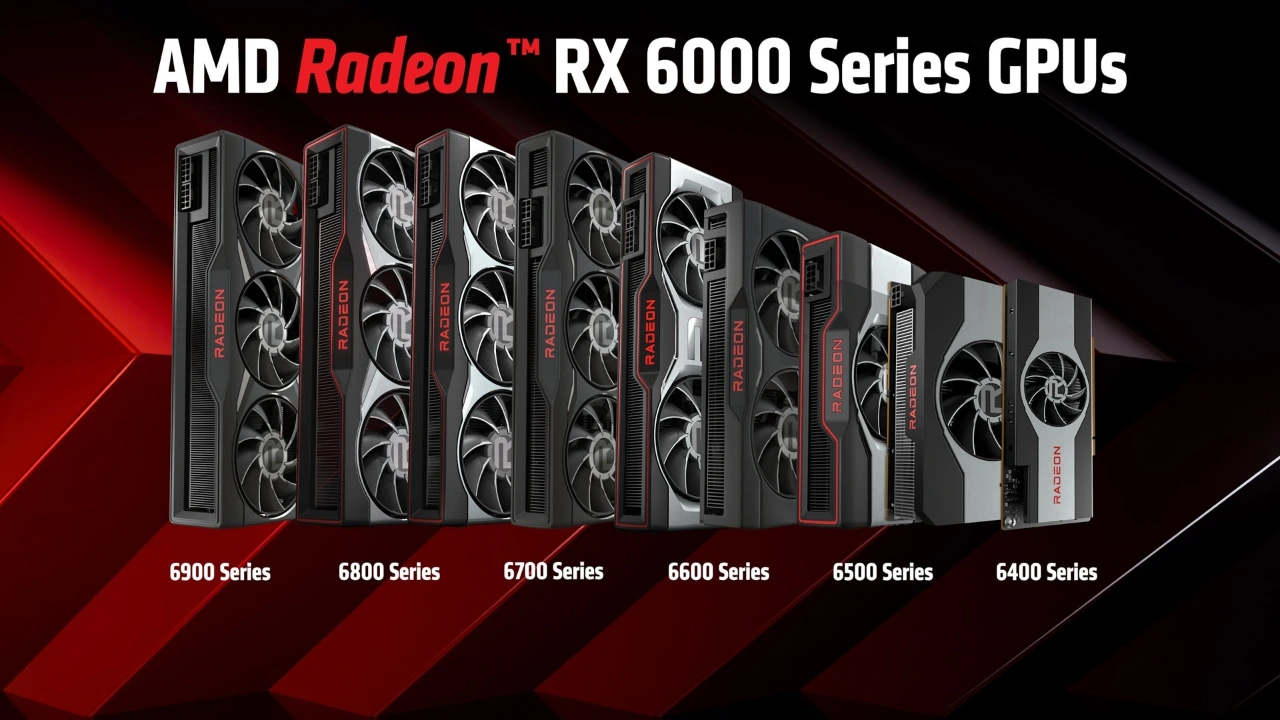
AMD Radeon™ RX 6000 Series graphics cards.
AMD Ryzen™ AI Max processors.
Laptops powered by AMD Ryzen™ AI 9 processors.
Gaming handhelds featuring AMD Ryzen™ AI Z2 Extreme, Ryzen™ Z2 Extreme, and Ryzen™ Z2 A processors.
Xbox Series X|S consoles, coming soon.
The Context: Why FSR 4 Was Initially Exclusive
FSR 4 was originally launched as an exclusive feature for the AMD Radeon RX 9000 series. This decision raised some frustration among fans, especially since it coincided with NVIDIA's release of the superior DLSS 4 Transformer model for all RTX series cards.
The reason for this exclusivity was primarily hardware-based. NVIDIA was able to bring DLSS 4 to all its RTX cards because they all feature dedicated physical cores called Tensor Cores. These specialized cores handle the deep learning neural network calculations needed to boost frame rates and reconstruct images without overloading the standard CUDA cores. Earlier AMD cards lacked a direct competitor to these Tensor Cores.
The Technical Achievement: How AMD Made It Work
AMD has been working to backport FSR 4 support to older hardware.
RX 7000 Series: AMD managed to bring FSR 4.1 support to the RX 7000 series through an INT8 Model, which is an 8-bit integer number format used to compress AI data.
RX 6000 Series: Now, through extensive testing and tweaking, AMD has optimized FSR 4.1 to run on the even older RX 6000 series.
A Big Win for Xbox
In a surprising and impressive move, AMD is also bringing FSR 4.1 support to Xbox Series X|S consoles. This is a significant achievement for Xbox, as on the console side, only Sony's premium PlayStation 5 Pro currently supports a comparable technology. This move could help level the playing field for cross-platform titles.
The Mobile and Handheld Push
FSR 4.1 is also making its way to mobile APUs powering high-performance laptops and mini-PC workstations, such as AMD Ryzen™ AI Halo PCs or ASUS ROG Flow Z13 and TUF A14 laptops.
Support is also coming to AMD gaming handhelds, though not for every chip at the moment. Official support is being added for:
Ryzen AI 9
AMD Ryzen AI Z2 Extreme
Ryzen Z2 Extreme
Ryzen Z2 A
However, AMD did not mention support for the Z1, Z1E, or the base "Z2" chips. This appears to be either a marketing move to prioritize their latest handhelds or because each chip requires massive tweaking to run the FSR 4.1 model. For example, the newer Z2A chip has an older Graphics Processor based on the RDNA 2 Architecture, while the Z1/Z1E are based on RDNA 3.
It remains to be seen how well FSR 4.1 will work on these unsupported devices through unofficial means, such as with the OptiScaler tool. For now, the Z1 and Z1E are officially unsupported.
sources : AMD